Butter Tteok (버터떡): Korea's Crispy-Chewy Baked Rice Cake, Explained
What is butter tteok? How a butter-baked rice cake went from zero to one of Korea's most-searched desserts in two weeks, according to Naver data — the canelé-outside, mochi-inside texture, the convenience store race — and the easy way to bake it at home.

Why Everyone Is Talking About It
In the first two weeks of March 2026, a dessert almost nobody in Korea had heard of became the one Korean home bakers couldn't stop posting. Naver search data tells the story in one line: interest in butter tteok went from an index of 1 on March 1 to 100 — the maximum — by March 13. Related Instagram posts reportedly passed 20,000 in a month. A major coffee chain reportedly saw sales of its version jump 300% and sell out at some locations, and grocery data showed the home-baking wave underneath it: sweet rice flour sales up more than 100% year over year.
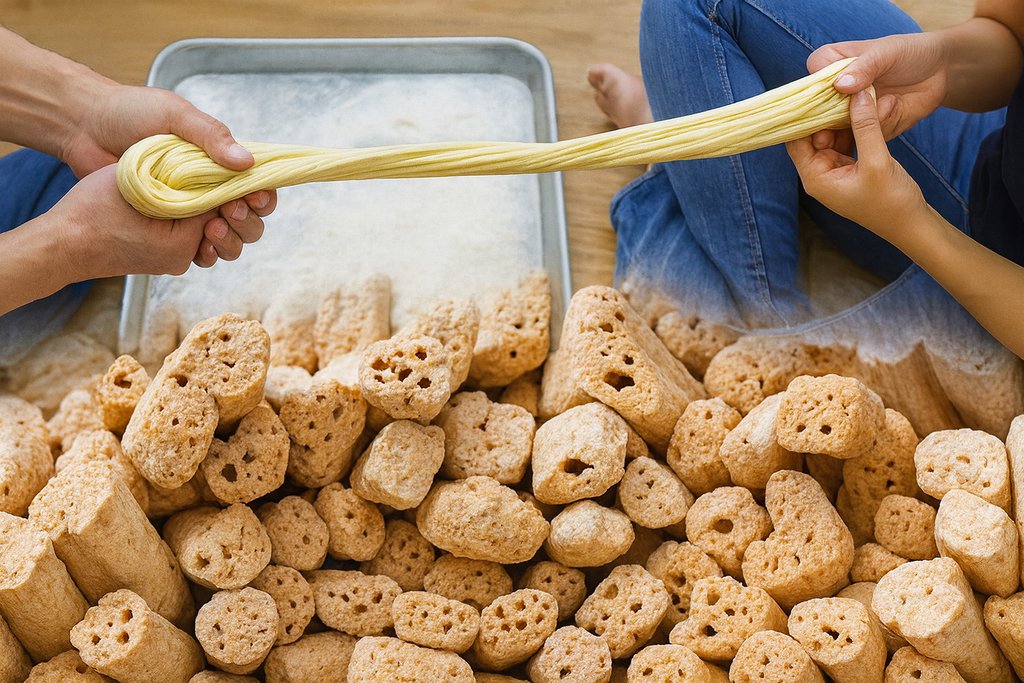
The product behind all this is disarmingly simple: a small baked rice cake with a crackly, canelé-like crust and a warm, stretchy, mochi-soft center. Koreans compress the appeal into one word — geot-ba-sok-jjon, "crispy outside, chewy inside." It's also, conveniently for us, one of the easiest trend desserts to make in a home oven. Let's get into where it came from, why it moved so fast, and how to bake a proper batch.
A note for American bakers before we start: if you've ever had Hawaiian butter mochi, you already understand this dessert's DNA — the two are cousins from the same glutinous-rice family. Butter tteok is the compact, individually-baked, crust-forward Korean take, and of every trend this series has covered, it's the one where the homemade version most convincingly beats the store version — a rare trend where the home kitchen wins.
Where It All Started
Butter tteok didn't start in Korea. Its direct ancestor is huangyou niangao (黄油年糕) — "butter rice cake" — a Chinese bake that takes niangao, the chewy glutinous rice cake eaten at Lunar New Year, enriches it with butter, milk, and sugar, and bakes it until the outside caramelizes. Versions of butter-baked mochi exist across Asia and the Pacific — Hawaiian butter mochi bakers will recognize the idea instantly — but the compact, individually-baked format that reached Korea came via the Chinese dessert scene.
The Korean adaptation settled on a formula of glutinous rice flour and tapioca starch, worked with milk and a serious amount of butter, baked in small molds until the crust turns deep golden. The tapioca matters: it's what pushes the interior past ordinary rice-cake territory into that springy, almost bouncy chew Korean dessert culture prizes. The comparison you see over and over in Korean reviews: the outside bites like a canelé, the inside pulls like fresh injeolmi.
For Korean eaters, that made butter tteok feel simultaneously new and familiar — tteok is the most traditional food category there is, but nobody's grandmother ever baked it in butter.
One more piece of context that explains the reception: Korea was primed for this. The past few years of Korean dessert trends have been a long love letter to chewy textures — from the mochi-stuffed cookies of the du-jjon-ku wave to tteok skewers to the enduring cult of injeolmi everything. A dessert whose entire identity is "maximum chew, plus browned butter" wasn't fighting for attention against foreign flavors; it was arriving in a country that had already decided chewy was the point. The butter was just the invitation.
Why It Blew Up
The speed was the story. Cafés in Seoul started posting the golden, blistered little cakes in early 2026; the crackle-and-pull texture shot was tailor-made for short video, and the price helped — around 1,600 won apiece (a little over a dollar) at neighborhood cafés, a fraction of what the Dubai-chocolate wave had been charging. After months of 5,000-won trend desserts, a cheap one felt almost radical.
Then commerce moved at Korean speed. Ediya, one of the country's biggest coffee chains, rolled a butter tteok item into its menu nationwide; CU convenience stores rushed out what they called the industry's first packaged butter tteok in mid-March; even Lotte Cinema developed a version to sell at movie theaters. Within weeks, a dessert that had been a café curiosity was available at the corner store, the coffee chain, and the multiplex.
And crucially, people baked it themselves. Unlike Dubai chocolate — which required imported kataifi and pricey pistachio cream — butter tteok needs glutinous rice flour, tapioca starch, butter, milk, and sugar. Korean grocery data showed exactly that: sweet rice flour sales roughly doubled, tapioca starch up nearly 40%. When the home-baking version of a trend is genuinely good, the trend gets a second, longer life in kitchens after the café lines fade. That's the pattern that separates keepers from flash-in-the-pan crazes — and it's why flour sales might be a better trend indicator than search graphs.
How It Keeps Evolving
Variations arrived on schedule: injeolmi butter tteok dusted with roasted soybean powder, red-bean-and-butter versions riding Korea's long-running angbutter (sweet red bean + cold butter) combination, chocolate and matcha versions, cheese-topped versions. Bakeries folded it into existing formats — butter tteok scones, butter tteok financiers — the standard Korean remix cycle we covered in the Dubai chocolate story.
But butter tteok's most interesting contribution to the trend conversation is what it revealed about trend lifespans. Korean analysts tracking Naver data noted that the "half-life" of viral desserts keeps collapsing: the croffle held peak interest for about 163 days in 2020, tanghulu for 54 days in 2023, Dubai chocolate for roughly 13 days in 2024 — and butter tteok's search index had already slid from 100 to 40 within eleven days of its peak. Korean media began asking openly whether the dessert trend machine was exhausting its own audience, with commenters describing "trend fatigue" and manufactured hype.
My read, for what it's worth: the café lines are a poor measure of a dessert's actual worth. Croffles outlived their hype and became a permanent menu item; tanghulu mostly didn't. Butter tteok has the croffle profile — cheap ingredients, easy technique, genuinely satisfying result — which is why I'd bet on it quietly sticking around in home kitchens long after the search graph flatlines. It's already earned a permanent spot in mine.
As for what's next: Korean food media has already crowned a successor — chestnut tiramisu breads and "K-nutty" desserts built on traditional grain powders like black sesame and roasted soybean are the current bets. Which, if you've been following along, is exactly the injeolmi butter tteok variation below wearing a different hat. The wheel turns, but the pantry stays surprisingly constant: rice flour, grain powders, butter, red bean. Learn those and you're ahead of the next three trends before they happen.
Try It at Home
1. Classic Butter Tteok (Oven or Air Fryer)
The base recipe — six ingredients, one bowl, no mixer. The crust forms on its own in the oven; your only real job is resisting the urge to open the door early.
Ingredients
- 150g glutinous rice flour (chapssal-garu / sweet rice flour)
- 50g tapioca starch
- 60g sugar, pinch of salt
- 180ml whole milk
- 60g butter, melted (plus more for the molds)
- 1 egg
Steps
- Whisk milk, egg, sugar, and melted butter, then whisk in the rice flour, tapioca starch, and salt until smooth — the batter should be thick but pourable.
- Generously butter a muffin tin (or silicone molds) and fill each cup about 3/4 full.
- Bake at 180°C (355°F) for 30-35 minutes until the tops are deep golden and blistered. Air fryer: 160°C for about 20 minutes.
- Rest 10 minutes before unmolding — the crust sets as it cools.
- Eat warm, when the contrast is at its peak: crackly shell, molten-chewy middle.
- Storage note: these stale fast — the chew tightens within hours. Re-crisp day-old ones in the air fryer for 3 minutes and they come most of the way back.
The two flours that make it work
- Glutinous rice flour (sweet rice flour) — Mochiko or Korean chapssal-garu both work
- Tapioca starch — the secret to the bouncy chew
2. Injeolmi Butter Tteok
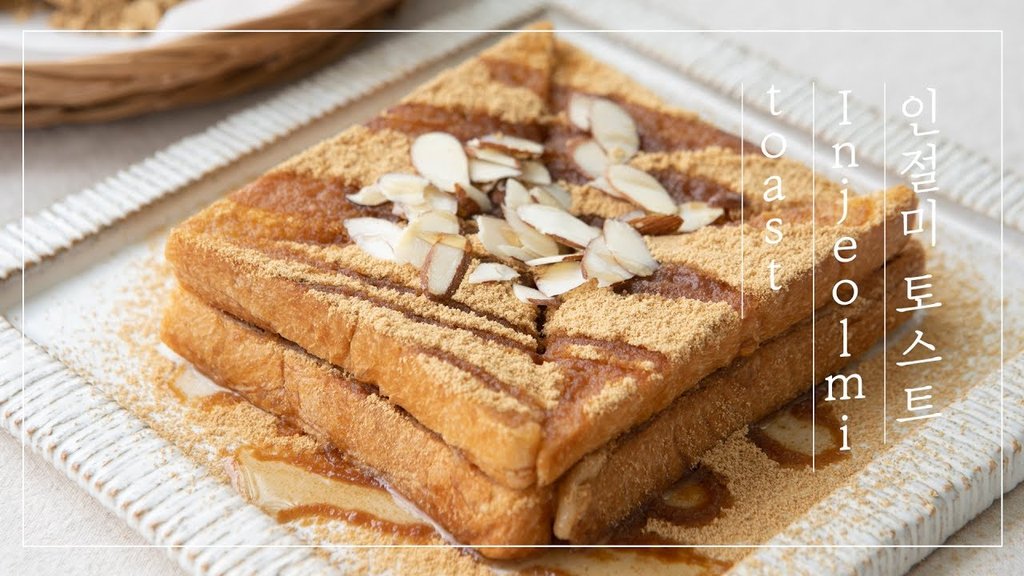
The variation Korean cafés reached for first: the base cake rolled warm in roasted soybean powder, which adds a nutty, almost peanut-butter depth that plays beautifully against the butter.
Ingredients
- 1 batch classic butter tteok (above), warm
- 4 tbsp roasted soybean powder (konggaru)
- 1 tbsp powdered sugar
Steps
- Mix the soybean powder and powdered sugar in a shallow bowl.
- Roll each warm (not hot) butter tteok in the mixture until coated.
- Serve immediately — the powder starts absorbing moisture as it sits.
- If the powder clumps, your tteok is too hot — give it another two minutes and try again.
The nutty upgrade
- Roasted soybean powder (konggaru) — also the injeolmi-toast essential
3. Angbutter Tteok (Red Bean + Butter)
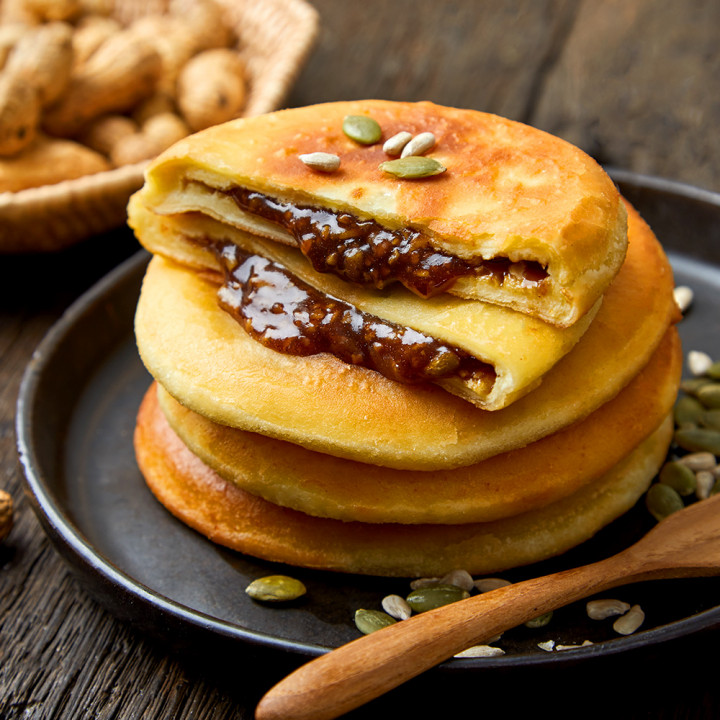
Korea's beloved angbutter formula — sweet red bean paste against a slice of cold butter — applied to the warm rice cake. The temperature contrast is the point: warm chewy cake, cool salty butter, sweet paste. If you've never had angbutter, this is the cheapest possible introduction to one of Korea's great flavor pairings.
Ingredients
- 4 classic butter tteok, warm
- 4 tbsp sweetened red bean paste (anko/pat)
- 4 thin slices cold salted butter
Steps
- Split each warm butter tteok horizontally, most of the way through.
- Spread a tablespoon of red bean paste inside.
- Tuck in a cold butter slice just before serving — it should stay half-solid.
- Eat within minutes, while the contrast lasts.
4. Pan Butter Tteok (No-Oven Version)
For the oven-less: the same batter concept, cooked like thick little pancakes. The crust is thinner but the chew survives intact — and it's ready in 15 minutes. This is also the version closest to the original Chinese street-stall huangyou niangao, which is often griddled rather than baked.
Ingredients
- Half batch of the classic batter, made slightly thicker (reduce milk to 120ml)
- 2 tbsp butter for the pan
Steps
- Heat a nonstick pan over medium-low and melt half the butter.
- Spoon in small rounds (about 3 tbsp each); cook 4-5 minutes per side, pressing gently, until deep golden.
- Add the remaining butter when you flip — the second side always drinks more.
- Cool 2 minutes before eating; the interior is lava-hot straight from the pan.