Types of Kimchi: 14 Kinds Explained (and Which to Try First)
By Logan · Published 2026-10-14 · Updated 2026-10-14
| Product | Main Vegetable | Spicy? | Style | Eat It |
|---|---|---|---|---|
| Baechu KimchiThe Classic | Napa cabbage | Yes | Whole-leaf, fermented | Fresh to well-aged |
| Baek KimchiNo Spice | Napa cabbage | No | Light brine | Young |
| Bossam Kimchi | Napa + fillings | Yes | Wrapped bundles | Special occasions |
| Yangbaechu Kimchi | Green cabbage | Yes | Chopped | Young |
| KkakdugiTry First | Korean radish | Yes | Cubes | With beef soups |
| Chonggak Kimchi | Ponytail radish | Yes | Whole with greens | Aged, crunchy |
| Yeolmu Kimchi | Young radish greens | Mild | Watery | Summer, on noodles |
| DongchimiDrinkable | Small radish | No | Clear water kimchi | Cold, with broth |
| Nabak Kimchi | Radish + cabbage | Barely | Pink water kimchi | Spring, young |
| Oi-sobagiEasiest to Make | Cucumber | Yes | Stuffed | Within days |
| Pa Kimchi | Green onion | Yes | Bundled | Aged a bit |
| Gat Kimchi | Mustard leaf | Yes, intense | Whole leaf | Aged |
| Buchu Kimchi | Garlic chives | Yes | Thin seasoning | Within days |
| Geotjeori | Napa cabbage | Yes | Unfermented | Same day |
When most people say "kimchi," they mean one thing: spicy fermented napa cabbage. That's fair — it's the kimchi you'll find in nearly every Korean home and restaurant. But in Korea, "kimchi" is a category, not a dish. There are white kimchis with no chili at all, kimchis made from cucumber or green onion, and watery kimchis you drink like a cold soup. Korean sources count well over a hundred regional and seasonal varieties.
You don't need to know all of them. But knowing the dozen or so you'll actually run into — at a Korean restaurant, in the refrigerated aisle at H Mart, or in a recipe — makes Korean food a lot easier to navigate. Here they are, grouped by what they're made from.
How Kimchi Types Differ
Almost every kimchi follows the same basic idea: salt a vegetable to draw out water, coat it in a seasoning paste (usually gochugaru, garlic, ginger, and some kind of salted seafood), and let it ferment. What changes is the vegetable, whether it's spicy or white, whether it's a "dry" kimchi or a brine-heavy "water" kimchi, and how long it's meant to ferment — some are eaten fresh the same day, others are aged for months.
Cabbage Kimchis
1. Baechu Kimchi (Napa Cabbage Kimchi)
The default. Whole napa cabbage is salted, then each leaf is rubbed with a red seasoning paste, and the heads are packed into containers to ferment. This is what's in the jar labeled simply "kimchi," what goes into kimchi jjigae, and what most of the store-bought brands are. Young, it's crunchy and bright; aged, it's sour and soft and perfect for cooking.
2. Baek Kimchi (White Kimchi)
Napa cabbage kimchi made without chili. The seasoning is garlic, ginger, pear, and sometimes jujube and pine nuts, in a light, slightly sweet brine. It's mild, refreshing, and the kimchi to offer anyone who can't eat spice — including kids.
3. Bossam Kimchi (Wrapped Kimchi)
A fancier style from the Kaesong region: cabbage leaves wrapped around a filling of radish, pear, chestnut, oysters, and other treats, tied into a bundle. It's a special-occasion kimchi. (It shares a name with bossam, the boiled pork wraps, because both involve wrapping — but they're different things.)
4. Yangbaechu Kimchi (Green Cabbage Kimchi)
Made with ordinary round green cabbage instead of napa. It's crunchier and a little sweeter, and it's a practical home substitute when napa cabbage is hard to find or expensive.
Radish Kimchis
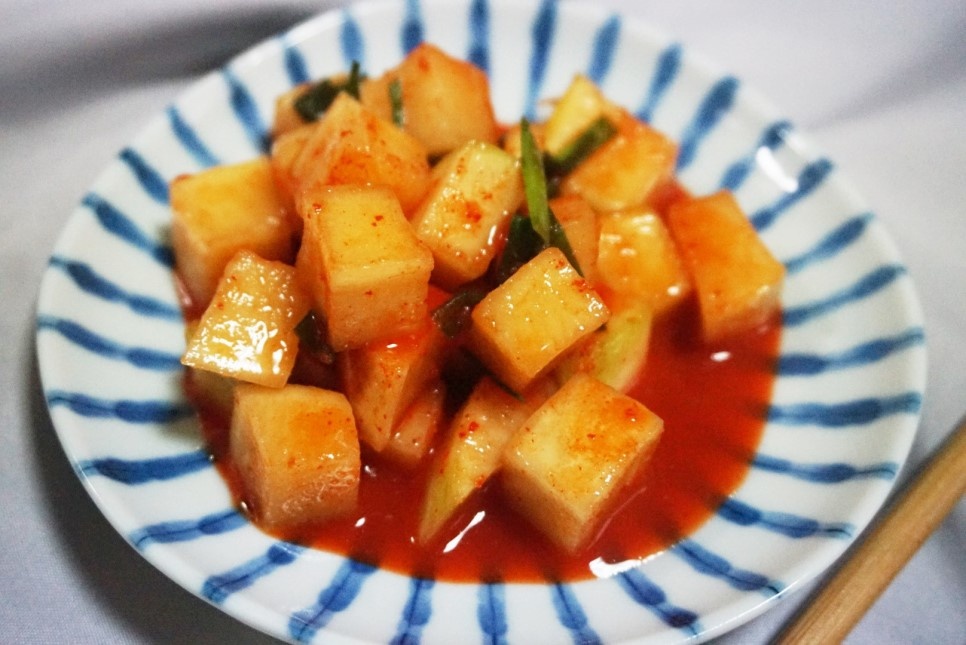
5. Kkakdugi (Cubed Radish Kimchi)
Korean radish cut into cubes and fermented in the same red seasoning as baechu kimchi. It's crunchy, juicy, and a little sweet, and it's the standard companion to beef soups like seolleongtang and galbitang. Easier to make than cabbage kimchi, too — see our kkakdugi recipe.
6. Chonggak Kimchi (Ponytail Radish Kimchi)
Made with chonggak-mu (also called altari-mu), a small, whole young radish variety with its leafy greens still attached — the "ponytail." The radish stays firm and crunchy for a long time, and the greens ferment into something tangy and pleasantly chewy. You eat it by picking up a whole radish by its greens.
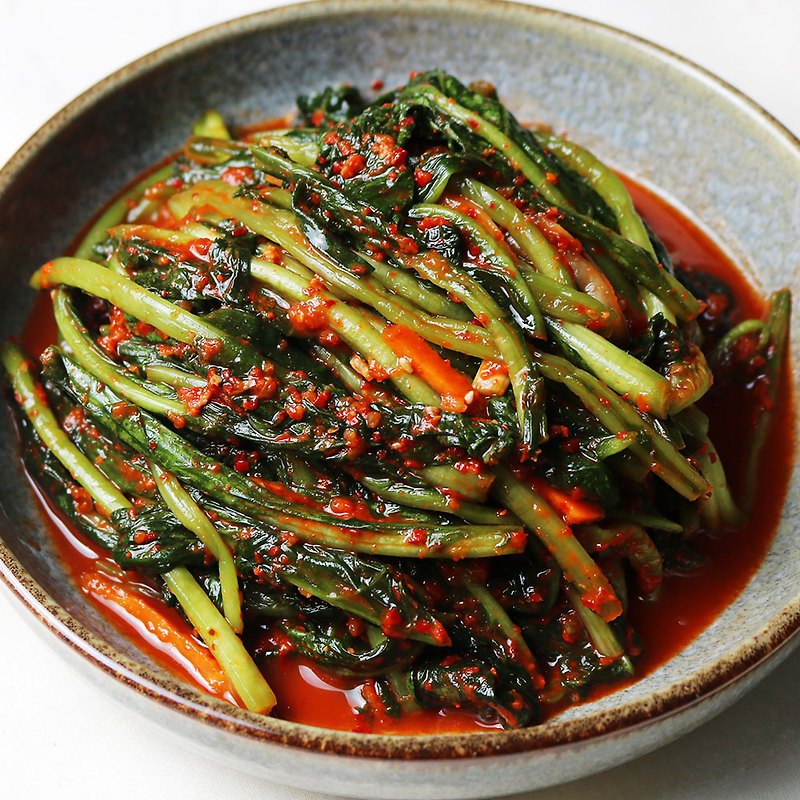
7. Yeolmu Kimchi (Young Summer Radish Kimchi)
A summer kimchi made from the tender greens of young radishes, often with a thinner, more watery seasoning. It's lighter and less pungent than winter kimchis and is the classic topping for cold noodles and bibimbap in hot weather. Try our young radish kimchi.
8. Dongchimi (Radish Water Kimchi)
Whole small radishes fermented in a clear, salty brine with pear, green onion, and a few chilies. There's no red paste at all. The result is a cold, fizzy, tangy broth with crisp radish — more like a drink than a side dish. The brine is used as the soup base for a kind of cold noodles, and a cup of it is a customary chaser after a heavy meal.
9. Nabak Kimchi (Mixed Water Kimchi)
Thinly sliced squares of radish and cabbage in a light, pink-tinged brine, usually with a bit of gochugaru strained in for color. It ferments fast, is eaten young, and is especially popular in spring. Like dongchimi, it's as much about the liquid as the vegetables.
Other Vegetable Kimchis
10. Oi-sobagi (Stuffed Cucumber Kimchi)
Cucumbers cut partway through, stuffed with a chive-and-radish seasoning, and eaten within a few days. It's crunchy, fresh, and only lightly fermented — a summer favorite. This is one of the best kimchis to make at home if you've never made any, because it's ready quickly and hard to get wrong.
11. Pa Kimchi (Green Onion Kimchi)
Whole scallions tied in bundles and fermented in a fish-sauce-heavy red seasoning. It's sharp and savory, with a strong garlic-onion punch that mellows as it ages. A small piece on top of a bowl of rice or next to grilled pork goes a long way. Here's our green onion kimchi.
12. Gat Kimchi (Mustard Leaf Kimchi)
Made from Korean mustard greens, which have a peppery, slightly bitter bite. It's a specialty of the Yeosu region in the south and tends to be seasoned heavily. It's intense, and people who love it really love it.
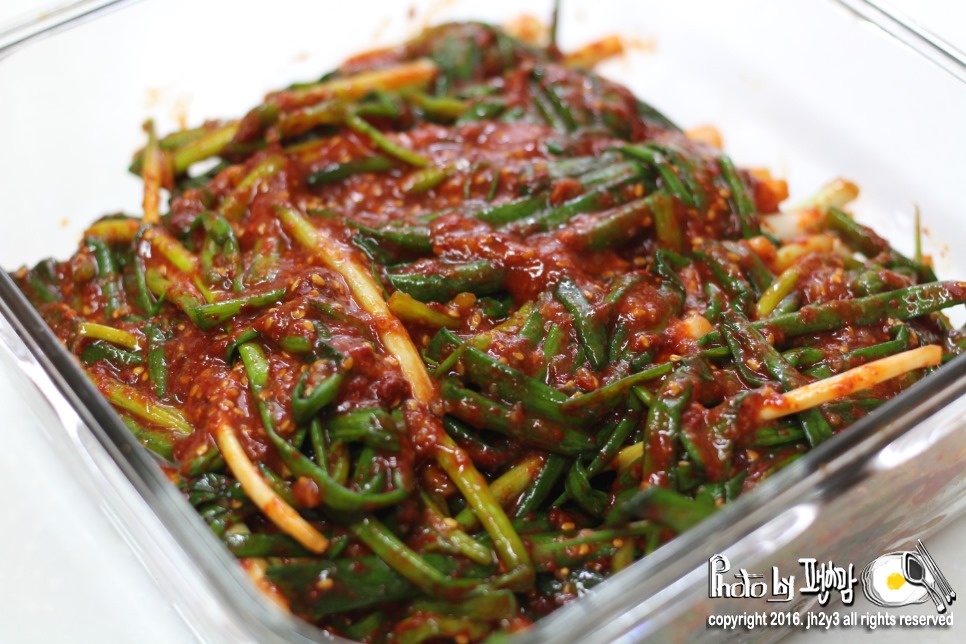
13. Buchu Kimchi (Chive Kimchi)
Korean garlic chives in a thin red seasoning. It's quick to make, needs almost no fermentation, and has a grassy, garlicky flavor. Common in the summer and often eaten within a day or two of making.
14. Geotjeori (Fresh Kimchi)
Not a vegetable so much as a style: napa cabbage (usually) seasoned and eaten immediately, with no fermentation. It's more like a spicy salad — crisp, garlicky, and sesame-y. Restaurants often serve it alongside aged kimchi so you get both ends of the spectrum. If you've eaten kimchi the same day it was seasoned, before any fermentation, that's essentially geotjeori.
Which Should You Try First?
If you already like kimchi: kkakdugi and chonggak kimchi. Same flavor family, totally different crunch.
If you don't like spice: baek kimchi or dongchimi. Both are mild, cold, and refreshing, and neither tastes like what you expect.
If you want to make one at home: oi-sobagi or geotjeori. Both are ready the same day and forgiving.
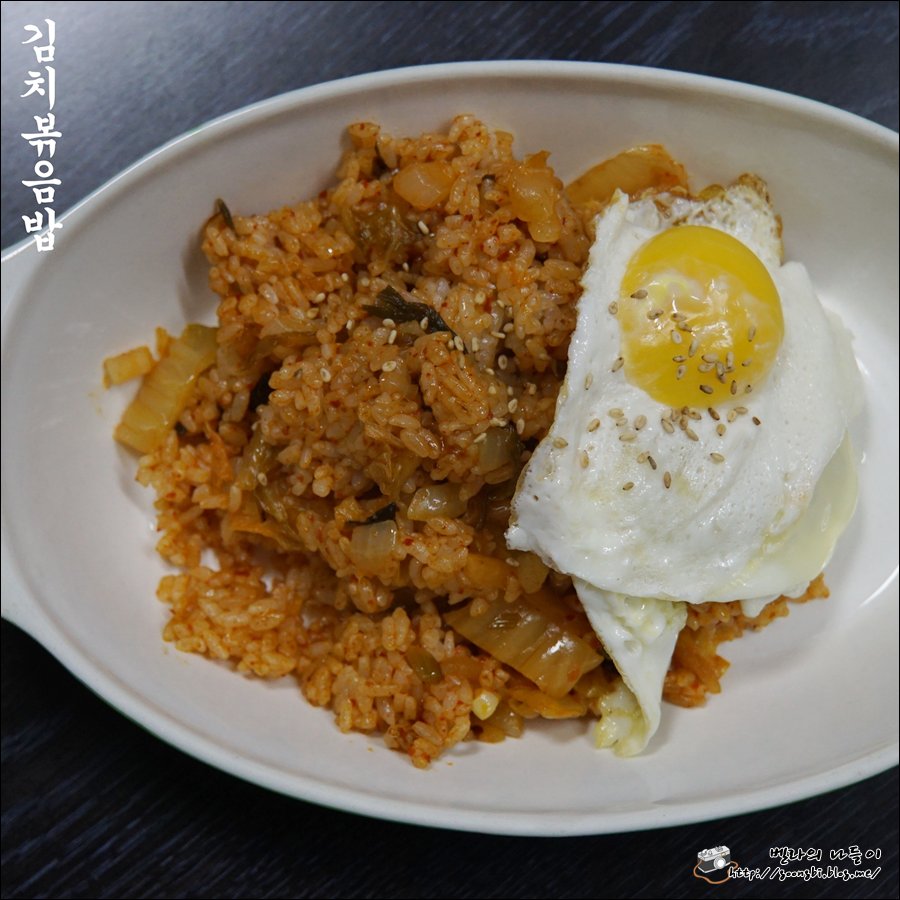
If you're cooking: stick with well-aged baechu kimchi. It's what kimchi fried rice, kimchi jjigae, and dubu kimchi are built around. See which kimchi is best for cooking.
A Note on Fermentation
The cabbage and radish kimchis change a lot as they age. Fresh, they're crunchy and mild; after a week or two in the fridge they turn tangier and softer; after a month or more they're fully sour and best for stews and stir-fries. Water kimchis mostly get fizzier and tangier. The quick ones — cucumber, chive, geotjeori — are meant to be eaten young and don't improve with long aging. None of these stages is "wrong" — Koreans eat kimchi at every point along the way and pick the right stage for the dish. For keeping it at the stage you like, see how to store kimchi.
You Might Also Like
Related Guides
What Is Kimchi? Complete Guide to Korean Kimchi
Everything about kimchi: what it is, how it's made, the types, health benefits, how to eat it, and whether to buy or make it at home.
I Tried the 8 Best Store-Bought Kimchi Brands (2026)
We compared 8 popular kimchi brands for eating fresh and cooking. Jongga, Mother in Law's, Cleveland Kitchen, and more — honest pros, cons, and best uses.
Best Kimchi for Cooking — Fresh vs Aged Guide
Fresh or aged kimchi for cooking? Learn when to use each, the best kimchi for jjigae and fried rice, top brands to buy, and ripeness tips.
How to Store Kimchi — Fridge & Freezer Tips
Learn how to store kimchi in the fridge or freezer, choose the right container, manage fermentation, and use over-fermented kimchi.
What to Cook with Kimchi — 15 Ideas Beyond Eating It Straight
Got a jar of kimchi? Here are 15 ways to cook with it — from fried rice to grilled cheese to kimchi pancakes. Categorized by meal type with difficulty levels.
Explore This Topic Further
Gochugaru
Korean red pepper flakes — sun-dried, coarsely ground, and the backbone of kimchi, stews, and most Korean seasoning.
Kimchi
Fermented napa cabbage — the soul of Korean cuisine. Used in stews, fried rice, pancakes, and dozens of other dishes.
Spicy Korean Recipes
Korean recipes that bring the heat — from tteokbokki to kimchi jjigae. Sorted by spice level.
Korean Recipes for Beginners
Start your Korean cooking journey with these beginner-friendly recipes. Simple ingredients, clear instructions, no prior experience needed.
K-Fridge
Already have some of these pantry staples?
Use K-Fridge to see which Korean recipes you can make tonight with the ingredients you already have at home.