
There's a specific kind of kimchi jjigae that only happens when the kimchi is too old to eat on its own. You know the kind — it's been sitting in the back of the fridge for a month, maybe more. It's fiercely sour, almost aggressively tangy, the kind of smell that hits you from across the kitchen. That's exactly what you want for this stew.
My mom always made kimchi jjigae when the kimchi jar hit that point. It wasn't a recipe decision so much as a household economy one. Nothing got wasted. Ripe, sour kimchi that had gone past its prime for eating straight — that kimchi becomes the base of the deepest, most flavorful stew you can make with a handful of ingredients.
The fermented sourness is the whole point. When you stir-fry the kimchi with the pork for those first few minutes, you get this transformation — the raw tang mellows and deepens into something almost smoky and savory. The recipe says to cook it until it "starts to smell deeply savory," and that's the right cue. You'll know.
I tried to shortcut it once with fresh kimchi. The broth came out thin and sweet, missing that acidic backbone. The recipe says it plainly: freshly made kimchi doesn't have enough flavor. You need at least two weeks. Older is better. My best batches have come from kimchi that's been fermenting for a month or more.
The tofu goes in at the end, gently. If you stir too aggressively it breaks apart. It's supposed to be cubed and soft, absorbing the broth. The simmer time matters too — 15 minutes minimum, but 30 minutes on a low flame turns this from a quick weeknight soup into something that tastes like it's been cooking all day.
Ingredients
Some links below are affiliate links. As an Amazon Associate I earn from qualifying purchases. Learn more
- 2 cups Kimchi (ripe, 2+ weeks old)(paid link)
- 6 oz Pork (shoulder or belly, sliced)
- 8 oz Tofu (soft or firm, cubed)(paid link)
- ½ medium Onion (sliced)
- 2 stalks Green onion
- 3 cloves Garlic (minced)
- 1 tablespoon Gochugaru (red pepper flakes)(paid link)(optional)
- 1 tablespoon Soy sauce(paid link)
- 1 teaspoon Sesame oil(paid link)
- 1 tablespoon Vegetable oil
- 2 cups Water
Missing ingredients?
K-Fridge tells you what Korean recipes you can make with what you already have.
Try K-Fridge FreeInstructions
- 1
Cut pork into thin bite-sized pieces. Cut tofu into 1-inch cubes. Slice onion. Chop green onion.
Tip: Kimchi Jjigae is best made with "ripe" kimchi that has been fermenting at least 2 weeks — it should smell very tangy and sour. Freshly made kimchi does not have enough flavor for this stew.
- 2
In a medium-sized pot, heat 1 tablespoon vegetable oil over medium-high heat. Add the pork and cook until lightly browned on the outside, about 2–3 minutes.
- 3
Add the kimchi and onion to the pot. Stir-fry with the pork for 3–4 minutes until the kimchi softens and starts to smell deeply savory.
- 4
Add 2 cups of water (or anchovy stock for deeper flavor). Add minced garlic, 1 tablespoon soy sauce, and gochugaru if using. Bring to a boil.
- 5
Once boiling, reduce to a medium simmer. Add the tofu cubes gently (do not stir vigorously or it will break up). Simmer for 10–15 minutes.
Tip: The longer it simmers, the more the kimchi flavor develops. 15 minutes minimum, 30 is even better.
- 6
Add sliced green onion. Drizzle sesame oil over the top. Taste the broth — adjust with a pinch of salt or more soy sauce. Serve in the pot with bowls of white rice on the side.
Kimchi Stew
Kimchi Jjigae
Ingredients
- 2 cups Kimchi (ripe, 2+ weeks old)
- 6 oz Pork (shoulder or belly, sliced)
- 8 oz Tofu (soft or firm, cubed)
- ½ medium Onion (sliced)
- 2 stalks Green onion
- 3 cloves Garlic (minced)
- 1 tablespoon Gochugaru (red pepper flakes)(optional)
- 1 tablespoon Soy sauce
- 1 teaspoon Sesame oil
- 1 tablespoon Vegetable oil
- 2 cups Water
Instructions
- Cut pork into thin bite-sized pieces. Cut tofu into 1-inch cubes. Slice onion. Chop green onion.
- In a medium-sized pot, heat 1 tablespoon vegetable oil over medium-high heat. Add the pork and cook until lightly browned on the outside, about 2–3 minutes.
- Add the kimchi and onion to the pot. Stir-fry with the pork for 3–4 minutes until the kimchi softens and starts to smell deeply savory.
- Add 2 cups of water (or anchovy stock for deeper flavor). Add minced garlic, 1 tablespoon soy sauce, and gochugaru if using. Bring to a boil.
- Once boiling, reduce to a medium simmer. Add the tofu cubes gently (do not stir vigorously or it will break up). Simmer for 10–15 minutes.
- Add sliced green onion. Drizzle sesame oil over the top. Taste the broth — adjust with a pinch of salt or more soy sauce. Serve in the pot with bowls of white rice on the side.
Nutrition (per serving)
306kcal
Calories
25g
Protein
12g
Carbs
19g
Fat
Frequently Asked Questions
You Might Also Like
More Korean Soups & Stews →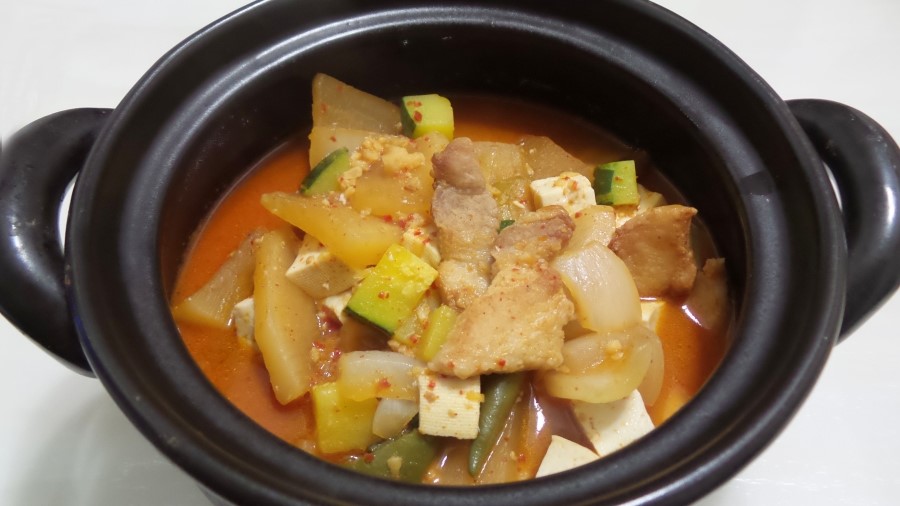
Cook Korean Food with What You Have
K-Fridge scans your fridge and tells you what Korean dishes you can make right now. No more guessing.