Squid StewOjingeo Jjigae
By Logan · Published 2026-04-15

Elan from Tbilisi had eaten Georgian seafood his whole life — churchkhela, fried fish at the Black Sea, octopus in walnut sauce. What he hadn't encountered was seafood cooked in spicy red pepper broth until it bubbled at the table. Ojingeo jjigae was the introduction.
The critical thing about squid in stew is time. You have a window — roughly three to four minutes — between rubbery-raw and rubbery-overcooked. In the middle of that window is a perfect texture: the rings curl at the edges, turn opaque, and become tender with a slight chew that feels satisfying rather than resistant.
Elan watched closely when the squid went in. He said it looked like the rings were trying to escape the pot, which is roughly accurate — squid muscle contracts in heat, causing the rings to tighten and curl. This is your visual cue that they're cooking. When the curl is complete and the flesh is white through, they're ready. Another two minutes and you've crossed into rubber territory.
The broth for ojingeo jjigae uses both gochugaru and gochujang — gochugaru for raw heat and color, gochujang for fermented sweetness and body. The potato cubes starch the broth slightly as they cook. The zucchini softens and absorbs the spice.
Elan said it reminded him of adjika stew from Georgia — spicy, thick broth, seafood — but with a completely different spice profile. He ate it faster than anything else I'd served him that trip, which I took as a positive review.
Ingredients
Some links below are affiliate links. As an Amazon Associate I earn from qualifying purchases. Learn more
Missing ingredients?
K-Fridge tells you what Korean recipes you can make with what you already have.
Try K-Fridge FreeInstructions
- 1
Clean the squid: remove the innards, peel off the skin, and slice the body into ½-inch rings. Cut the tentacles into bite-sized pieces.
Tip: You can buy pre-cleaned squid tubes to save time. Frozen squid works fine — thaw in cold water first.
- 2
Bring the anchovy stock to a boil. Add the cubed potato and cook for 5 minutes until slightly softened.
- 3
Add the gochugaru, gochujang, garlic, onion, and zucchini. Stir well and cook for 5 minutes.
- 4
Add the squid pieces and cook for 3-4 minutes until the squid turns opaque and curls up. Do not overcook or the squid becomes rubbery.
- 5
Taste and adjust seasoning. Serve hot with steamed rice.
Squid Stew
Ojingeo Jjigae
Ingredients
- 8 oz Squid (cleaned, sliced into rings)
- ½ medium Zucchini (sliced)
- 1 small Potato (cubed)
- ½ medium Onion (sliced)
- 1 tablespoon Gochugaru
- 1 tablespoon Gochujang
- 3 cloves Garlic (minced)
- 2 cups Anchovy stock
Instructions
- Clean the squid: remove the innards, peel off the skin, and slice the body into ½-inch rings. Cut the tentacles into bite-sized pieces.
- Bring the anchovy stock to a boil. Add the cubed potato and cook for 5 minutes until slightly softened.
- Add the gochugaru, gochujang, garlic, onion, and zucchini. Stir well and cook for 5 minutes.
- Add the squid pieces and cook for 3-4 minutes until the squid turns opaque and curls up. Do not overcook or the squid becomes rubbery.
- Taste and adjust seasoning. Serve hot with steamed rice.
Nutrition (per serving)
217kcal
Calories
23g
Protein
25g
Carbs
3g
Fat
Frequently Asked Questions
You Might Also Like
More Korean Soups & Stews →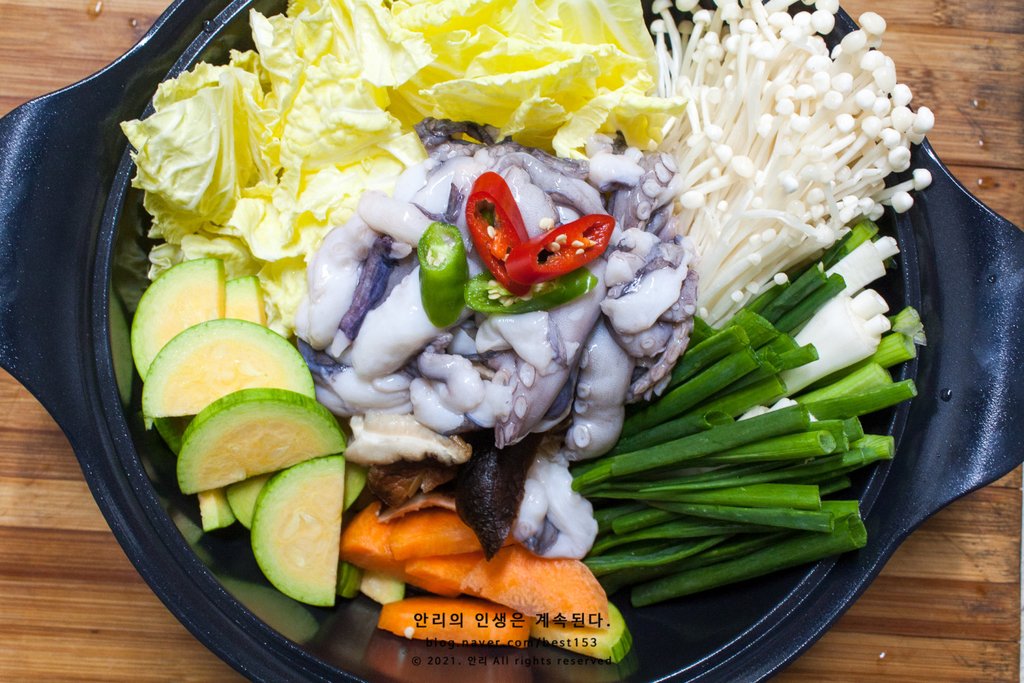
Cook Korean Food with What You Have
K-Fridge scans your fridge and tells you what Korean dishes you can make right now. No more guessing.