Kimchi Noodle SoupKimchi Guksu
By Logan · Published 2026-04-15

My friend Árpád from Budapest visited me in Seoul during winter, and on his second day he pointed at my kimchi jar sitting on the counter and asked: 'What can you make with that?' I thought for three seconds and said, 'Noodle soup. Twenty minutes.' He looked skeptical — he's Hungarian, he respects proper cooking time.
Kimchi guksu converted him. He watched me dump the chopped kimchi directly into a pot of anchovy stock, stir in gochugaru, and boil the somyeon noodles separately. When I ladled the broth over the noodles, the red color deepened and the kitchen smelled intensely savory and a little sour — the fermentation of the kimchi blooming in the heat.
Árpád ate two bowls. He said it reminded him vaguely of Hungarian fermented beet soup (kvasovka), but spicier and more satisfying. That parallel made sense to me — both cultures value fermented ingredients as the backbone of a soup rather than a garnish.
The key to a great kimchi guksu broth is using kimchi that has already started to sour. Fresh kimchi is too mild and bright. You want the stuff that's been sitting in your fridge for two or three weeks, the kind with that assertive tang. When it hits the hot stock, the sugars caramelize slightly and the fermented funk transforms into something deeply savory.
Somyeon noodles cook in two minutes and need to be rinsed cold to stop cooking — skip that step and they'll turn to mush in the broth. A drizzle of sesame oil at the end adds a nutty layer that rounds out the heat. For a full meal, crack a soft-boiled egg on top. Kimchi guksu is a 20-minute dinner that feels like it took much longer.
Ingredients
Some links below are affiliate links. As an Amazon Associate I earn from qualifying purchases. Learn more
- 7 oz Somyeon (thin wheat noodles)
- 1 cup Kimchi (chopped)(paid link)
- 4 cups Anchovy stock (or chicken broth)
- 1 tablespoon Gochugaru(paid link)
- 2 cloves Garlic (minced)
- 2 stalks Green onion (sliced)
- 1 teaspoon Sesame oil(paid link)
Missing ingredients?
K-Fridge tells you what Korean recipes you can make with what you already have.
Try K-Fridge FreeInstructions
- 1
In a pot, combine 4 cups anchovy stock, 1 cup chopped kimchi, 1 tablespoon gochugaru, and 2 cloves minced garlic. Bring to a boil, then simmer for 8-10 minutes until the kimchi is soft and the broth is flavorful.
Tip: Use well-fermented (sour) kimchi for the best flavor. The older the kimchi, the more depth the broth will have.
- 2
While the broth simmers, cook the somyeon noodles in a separate pot of boiling water for 2-3 minutes. Drain and rinse under cold water.
- 3
Place the rinsed noodles in serving bowls. Ladle the hot kimchi broth over the noodles.
- 4
Top with sliced green onion and drizzle with sesame oil. Serve immediately while piping hot.
Tip: Add a fried egg or sliced spam on top for a more filling meal.
Kimchi Noodle Soup
Kimchi Guksu
Ingredients
- 7 oz Somyeon (thin wheat noodles)
- 1 cup Kimchi (chopped)
- 4 cups Anchovy stock (or chicken broth)
- 1 tablespoon Gochugaru
- 2 cloves Garlic (minced)
- 2 stalks Green onion (sliced)
- 1 teaspoon Sesame oil
Instructions
- In a pot, combine 4 cups anchovy stock, 1 cup chopped kimchi, 1 tablespoon gochugaru, and 2 cloves minced garlic. Bring to a boil, then simmer for 8-10 minutes until the kimchi is soft and the broth is flavorful.
- While the broth simmers, cook the somyeon noodles in a separate pot of boiling water for 2-3 minutes. Drain and rinse under cold water.
- Place the rinsed noodles in serving bowls. Ladle the hot kimchi broth over the noodles.
- Top with sliced green onion and drizzle with sesame oil. Serve immediately while piping hot.
Nutrition (per serving)
458kcal
Calories
19g
Protein
83g
Carbs
6g
Fat
Frequently Asked Questions
You Might Also Like
More Korean Rice & Noodle Dishes →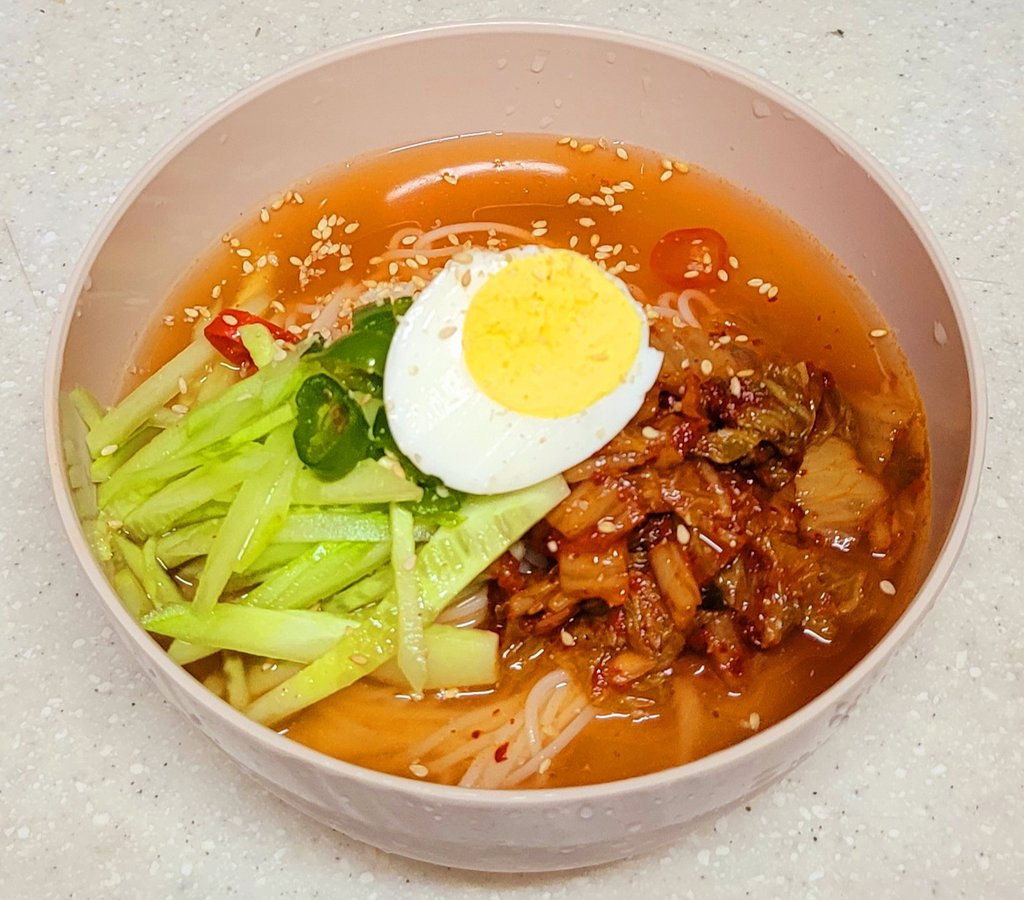
Cook Korean Food with What You Have
K-Fridge scans your fridge and tells you what Korean dishes you can make right now. No more guessing.