Spicy Seafood Noodle SoupJjamppong
By Logan · Published 2026-04-15

Teodora from Belgrade had a theory about spicy food: that people who grew up eating paprika-heavy cooking can handle more capsaicin than others. She was about to test it with jjamppong.
We were at my place on a Saturday and I'd bought a mixed bag of frozen seafood — squid, mussels, shrimp — specifically for this. The trick with jjamppong that most people skip is blooming the gochugaru in hot oil before anything else goes in. Thirty seconds of stirring the red pepper flakes in vegetable oil, and the entire kitchen fills with this incredible fragrance. The oil turns crimson. That's your broth color right there.
Teodora watched the broth darken as I added the seafood and water. She tasted a spoonful before the noodles went in and declared it 'legitimately spicy.' Not the mouth-numb kind, she said — more like a building heat that spreads through your chest. Serbian paprika dishes have warmth but not sustained heat. Jjamppong lands differently.
She finished her bowl. Then she ate half of mine.
Jjamppong is one of Korea's two great Chinese restaurant dishes — the other being jajangmyeon, the black bean paste noodles. Every Korean-Chinese (중화요리) restaurant in Korea offers both, and families are usually divided into jjamppong people and jajangmyeon people. I've always been jjamppong. The combination of briny seafood and red-oil broth over thick chewy noodles is one of the most satisfying bowls I know.
If you want it milder, cut the gochugaru to one tablespoon. But real jjamppong should make your nose run a little.
Ingredients
Some links below are affiliate links. As an Amazon Associate I earn from qualifying purchases. Learn more
- 10 oz Thick wheat noodles (jjamppong or udon)
- 6 Shrimp (peeled)
- 4 oz Squid (cleaned, cut into rings)
- 8 Mussels (scrubbed)
- 2 tablespoons Gochugaru(paid link)
- ½ medium Onion (sliced)
- 1 cup Cabbage (roughly chopped)
- 3 cloves Garlic (minced)
Missing ingredients?
K-Fridge tells you what Korean recipes you can make with what you already have.
Try K-Fridge FreeInstructions
- 1
Heat 2 tablespoons vegetable oil in a large pot over high heat. Add 2 tablespoons gochugaru and stir for 30 seconds until the oil turns red and fragrant. Be careful not to burn it.
Tip: Frying the gochugaru in oil first releases its flavor and color — this is the secret to jjamppong's vibrant red broth.
- 2
Add the sliced onion, minced garlic, and chopped cabbage. Stir-fry for 2-3 minutes until slightly wilted.
- 3
Add the shrimp, squid rings, and mussels. Stir-fry for 1-2 minutes. Pour in 5 cups of water. Bring to a boil and cook for 10 minutes until the broth is rich and the seafood is cooked.
- 4
While the broth cooks, boil the noodles separately according to package directions. Drain and divide into serving bowls.
- 5
Ladle the spicy seafood broth and toppings over the noodles. Serve immediately — the broth should be fiery red and aromatic.
Tip: Jjamppong is a Korean-Chinese dish — every Chinese restaurant in Korea serves it alongside jajangmyeon. The spicier, the better!
Spicy Seafood Noodle Soup
Jjamppong
Ingredients
- 10 oz Thick wheat noodles (jjamppong or udon)
- 6 Shrimp (peeled)
- 4 oz Squid (cleaned, cut into rings)
- 8 Mussels (scrubbed)
- 2 tablespoons Gochugaru
- ½ medium Onion (sliced)
- 1 cup Cabbage (roughly chopped)
- 3 cloves Garlic (minced)
Instructions
- Heat 2 tablespoons vegetable oil in a large pot over high heat. Add 2 tablespoons gochugaru and stir for 30 seconds until the oil turns red and fragrant. Be careful not to burn it.
- Add the sliced onion, minced garlic, and chopped cabbage. Stir-fry for 2-3 minutes until slightly wilted.
- Add the shrimp, squid rings, and mussels. Stir-fry for 1-2 minutes. Pour in 5 cups of water. Bring to a boil and cook for 10 minutes until the broth is rich and the seafood is cooked.
- While the broth cooks, boil the noodles separately according to package directions. Drain and divide into serving bowls.
- Ladle the spicy seafood broth and toppings over the noodles. Serve immediately — the broth should be fiery red and aromatic.
Nutrition (per serving)
1288kcal
Calories
150g
Protein
137g
Carbs
15g
Fat
Frequently Asked Questions
You Might Also Like
More Korean Rice & Noodle Dishes →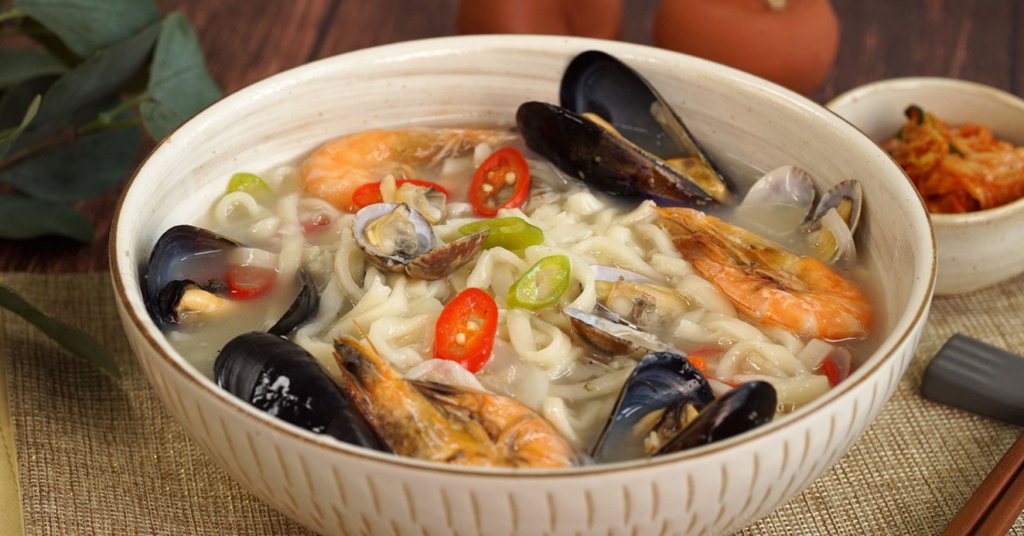
Cook Korean Food with What You Have
K-Fridge scans your fridge and tells you what Korean dishes you can make right now. No more guessing.