Frozen Kimbap: How a $3.99 Roll Went Viral at Trader Joe's (and What to Make Instead)
By Logan · Published 2026-07-21
Why is frozen kimbap always sold out? The story behind the Trader Joe's kimbap craze — the TikTok video that started it, the Korean factory behind it, the Costco expansion — and how to make better kimbap at home.
Why Everyone Is Talking About It
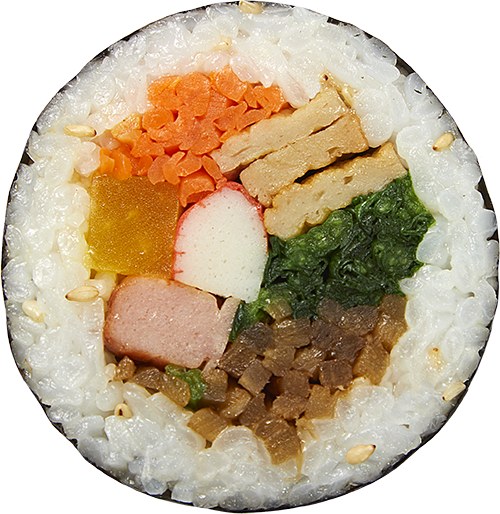
In August 2023, a $3.99 item quietly appeared in Trader Joe's freezer aisles: Korean kimbap — seaweed rice rolls, fully cooked, ready after 2 minutes in the microwave. Within a month, the entire first shipment was gone — all 250 tons. Roughly a million rolls, sold out across 560 stores, with some locations limiting customers to two packs each and shoppers reporting shelves empty by 8:40 in the morning.
Two-plus years later, the frozen kimbap category the craze helped create is still growing — Costco jumped in, more Korean manufacturers entered the export market, and "kimbap" has gone from a word most American shoppers had never heard to a freezer-aisle staple. Here's how it happened, and — because homemade is still better — how to roll your own.
Where It All Started
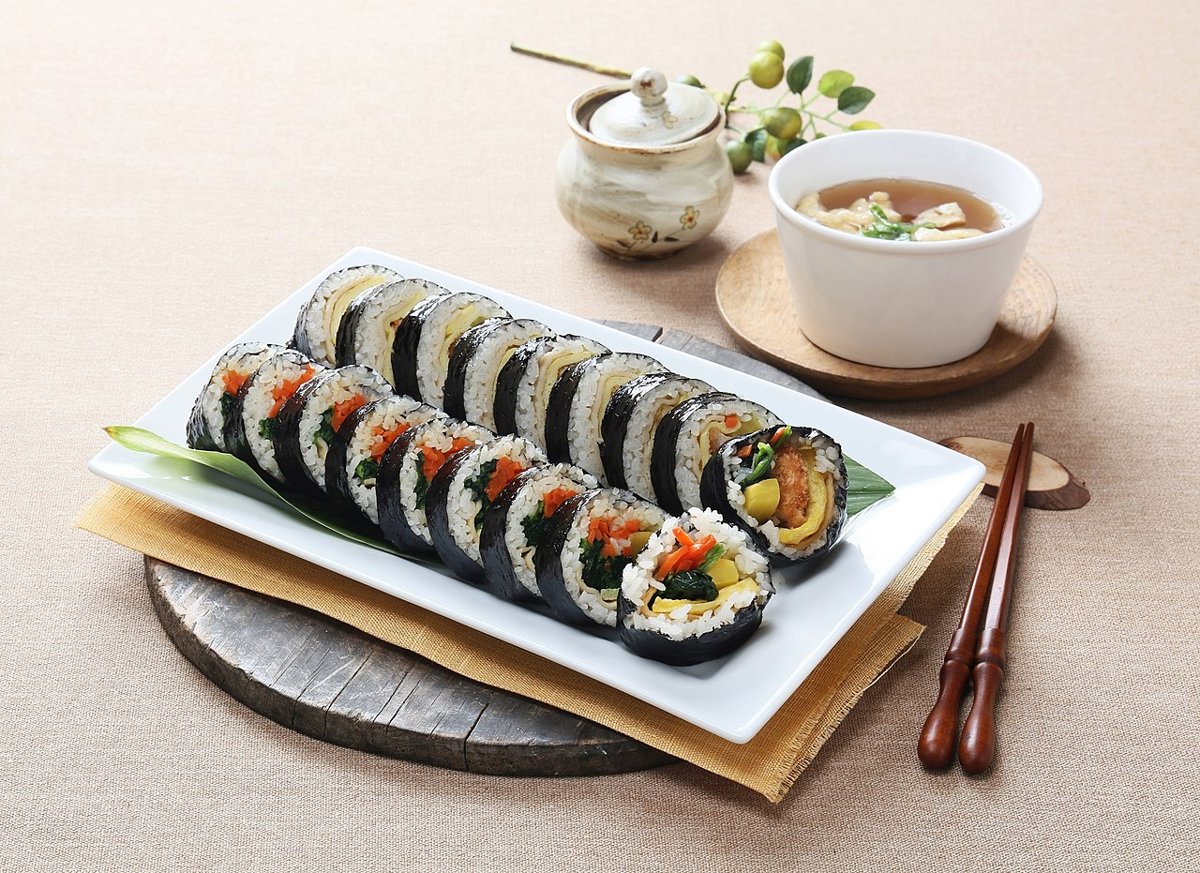
Kimbap itself is over a century deep in Korean daily life: rice and fillings rolled in gim (roasted seaweed), the default picnic food, school lunch, and road-trip meal of Korea. What's new is the technology that let it survive a freezer. Kimbap is notoriously bad at being stored — the rice hardens, the vegetables weep. The rolls that reached Trader Joe's were made by Allgot, a young food company from Gumi, a small industrial city in southeastern Korea, which reportedly solved the problem by flash-freezing rolls at minus 45°C, locking the rice's texture before it could stale.
Trader Joe's picked up the product — a vegetable roll with braised burdock, pickled radish, and seasoned spinach — and priced it at $3.99. Nobody involved expected what came next.
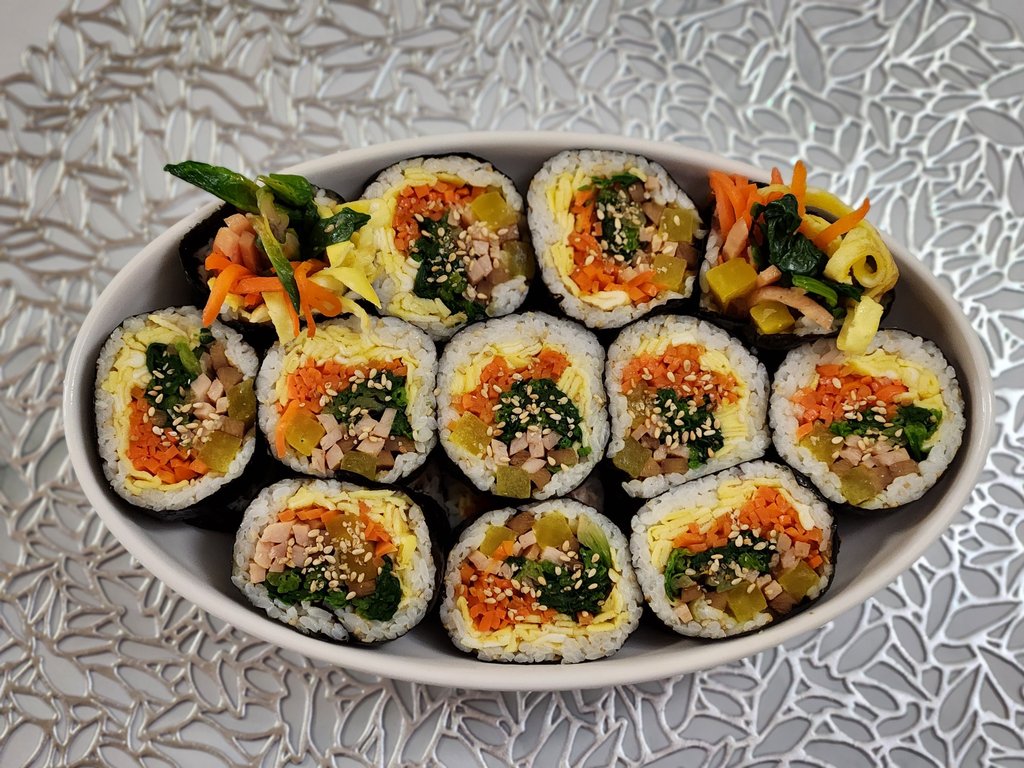
To understand why the freezer part matters, it helps to know what kimbap actually is — because "Korean sushi" undersells it. Sushi rice is seasoned with vinegar and built around raw fish; kimbap rice is seasoned with sesame oil and salt, and the fillings are cooked or pickled: seasoned spinach, stir-fried carrot, egg omelet, braised burdock, the neon-yellow crunch of danmuji radish. A roll is a complete, balanced meal — protein, vegetables, carbs — which is exactly why Korean parents have been packing it into lunchboxes for generations, and why a frozen version that actually tastes right was such a big deal. Freezing rice usually ruins it. Solving that unlocked a category.
Why It Blew Up
On August 16, 2023, Sarah Ahn, a Korean-American food creator in Orange County, posted a TikTok of herself and her mother trying the Trader Joe's kimbap. The video passed 11 million views in about three weeks. Thousands of comments turned into thousands of store runs — commenters reported shelves empty before 9 a.m. — and store managers described customers loading 15 to 20 packs into their carts at once.
Trader Joe's marketing director called it a perfect storm: a hot cultural moment (Korean food riding the K-content wave), TikTok's grocery-selling power, and one hugely relatable video. Ahn's own framing cut deeper — she has said that as a child she was mocked for bringing kimbap to school in her lunchbox, and that watching the same food sell out at an American grocery chain felt like watching her culture get embraced in real time. That story, told mid-craze, gave the sellout a meaning beyond novelty — and it resonated far past the Korean-American community. For a lot of second-generation kids, the lunchbox moment was instantly recognizable; for everyone else, it explained why this particular freezer item seemed to carry so much feeling. Ahn put it simply in interviews: Americans knew sushi rolls, but kimbap was genuinely new to them.
There was also a genuinely practical hook: most American shoppers knew sushi, but kimbap was new — heartier, fully cooked, sesame-scented instead of vinegared, and at $3.99 it was an unusually cheap complete meal. Virality got people to the freezer; value brought them back.
The numbers tell the story of how fast grocery TikTok can move product: roughly 250 tons — about a million rolls — sold out within a month of launch, and "is kimbap back at Trader Joe's?" became its own genre of video as shoppers tracked restocks. It was far more demand than a first-time exporter from Gumi had planned for.
How It Keeps Evolving
The sellout kicked off a frozen kimbap boom. Allgot reportedly took on hundreds of tons of new orders and began working toward Costco distribution and US production plans. Costco eventually stocked its own frozen kimbap — a fried-tofu-and-vegetable version from a different Korean maker, Hanwoomul, sold six rolls to a bag — and shoppers immediately started doing Trader-Joe's-versus-Costco comparison videos. The value math got debated in the comments: Costco's bag of six large rolls landed around $19, against $3.99 for a single Trader Joe's pack — cheaper per roll at the warehouse, but you needed freezer space and a membership. Either way, by early 2025 frozen kimbap had gone from a one-store curiosity to a multi-retailer category with its own loyal shoppers. Bigger players followed: Sajo Daelim shipped tens of tons of rolls including a vegan burdock version, CJ's Bibigo brand entered the category, and smaller maker Bokmansa now reportedly exports frozen kimbap to around 19 countries.
The trend also pushed people toward the real thing. Korean grocery stores like H Mart saw shoppers hunting for kimbap after Trader Joe's shelves emptied, and searches for homemade versions spiked — from classic rolls to Gwangjang Market-style mayak ("addictive") mini rolls to the folded kimbap format that had its own TikTok moment. Which brings us to the good news: kimbap is one of the most home-cook-friendly foods in the Korean repertoire. No raw fish, no special equipment beyond a bamboo mat (and even that's optional), and total freedom on fillings.
Zoom out and frozen kimbap fits a bigger pattern — the same one that carried Buldak fire noodles from a Seoul spicy-food alley to American shelves. Korean food keeps reaching US kitchens not through restaurants first, but through affordable grocery formats that travel well on social media: a $3.99 roll, an $8 five-pack of noodles. The freezer aisle, of all places, became the front door.
One honest note from someone who makes kimbap regularly: the frozen version is a genuinely good lunch, but it's an imitation of the real thing, not a replacement. Fresh kimbap has a contrast frozen can't reproduce — crisp seaweed against warm rice, the snap of just-pickled radish. The good news is that of all the foods in the Korean home-cooking canon, kimbap might be the most forgiving for beginners: nothing is raw, every filling is prepped in advance, and your third roll will already look better than your first. Below are the four builds worth learning, from the classic to the five-minute hack.
Try It at Home
Some links below are affiliate links. As an Amazon Associate I earn from qualifying purchases. Learn more
1. Classic Kimbap (the One in Your Head)
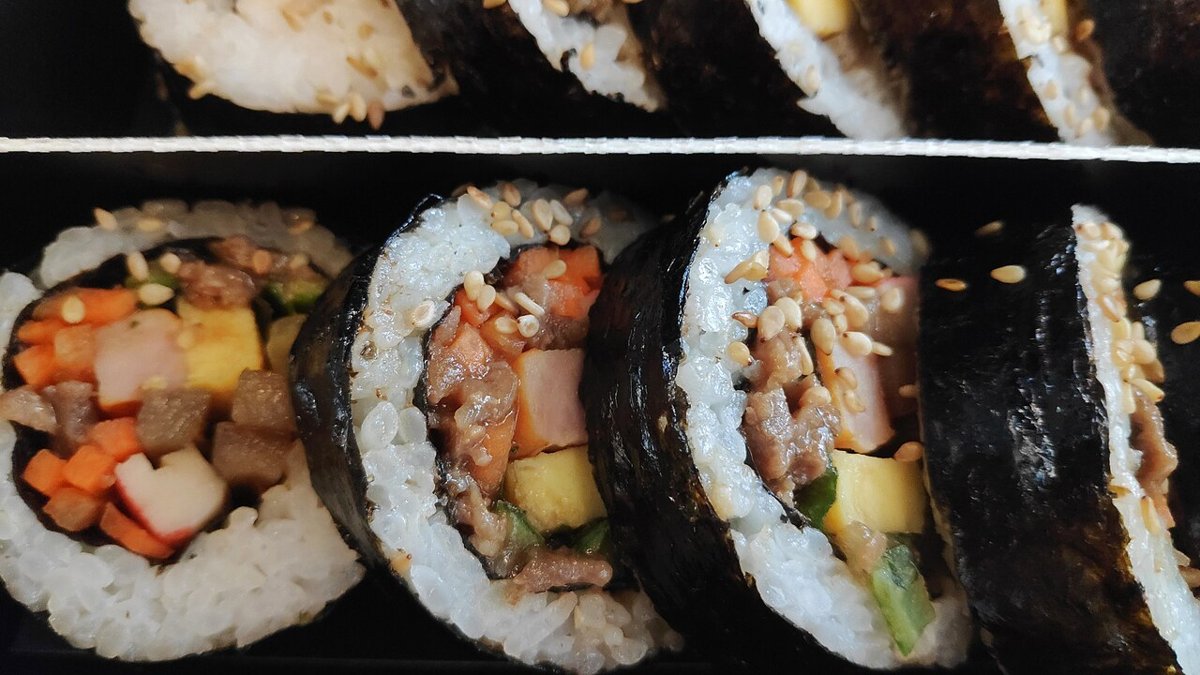
The full lunchbox build: seasoned rice, a rainbow of fillings, rolled tight and sliced. This is the version the Trader Joe's roll is imitating — and the homemade one is fresher, bigger, and endlessly customizable.
Ingredients
- 2 cups cooked short-grain rice, warm
- 1 tbsp sesame oil + 1/2 tsp salt (for the rice)
- 4 sheets gim (roasted seaweed for kimbap)
- Yellow pickled radish (danmuji), cut into strips
- 1 carrot, julienned and lightly stir-fried
- 2 eggs, made into a thick omelet and sliced
- Blanched spinach, seasoned with sesame oil and salt
- Ham or imitation crab strips (optional)
Steps
- Season the warm rice with sesame oil and salt — this, not vinegar, is what makes it kimbap and not sushi.
- Lay gim shiny-side down, spread a thin, even layer of rice over 2/3 of the sheet.
- Line up the fillings in a tight row across the center.
- Roll firmly away from you, pressing as you go; seal the edge with a dab of water.
- Brush the outside with a little sesame oil, then slice with a sharp knife wiped between cuts.
- Don't overfill on your first attempt — a slightly emptier roll that closes beats a generous one that bursts. You can always roll another.
The two things worth buying for this
- Roasted seaweed sheets for kimbap (gim)(paid link) — sushi nori works, but kimbap gim is sturdier
- Danmuji (yellow pickled radish)(paid link) — the crunch that makes it taste authentic
2. Mayak Gimbap (Gwangjang Market Mini Rolls)
The famous "addictive" mini rolls from Seoul's Gwangjang Market — just carrot, spinach, and pickled radish in bite-size rolls, with the mustard-soy dipping sauce doing the heavy lifting. The name literally means "narcotic gimbap" — Seoul market slang for how hard they are to stop eating.
Ingredients
- 2 cups seasoned kimbap rice (as above)
- 4 sheets gim, cut in half
- Julienned carrot, blanched spinach, danmuji strips
- Dipping sauce: 1 tbsp soy sauce, 1 tsp Korean mustard (or Dijon), 1 tsp sugar, 1 tsp vinegar, splash of water
Steps
- Roll skinny rolls using the half-sheets with just the three fillings — no slicing needed, they're eaten whole.
- Whisk the sauce until the sugar dissolves.
- Serve a pile of rolls with the sauce for dipping — they disappear faster than you can roll them.
3. Folded Kimbap (the No-Roll Hack)
The TikTok-famous fold: one gim sheet, four quadrants, fold twice, done. No mat, no rolling skill, five minutes — the format that got a generation of non-Koreans making kimbap at home.
Ingredients
- 1 sheet gim
- 1/2 cup seasoned rice
- Any 3 fillings — fried egg, cheese, spam, kimchi, avocado all work
Steps
- Cut a slit from the center of the gim sheet to the bottom edge.
- Mentally divide into 4 quadrants; put rice in two (diagonal), fillings in the others.
- Fold quadrant over quadrant — left-bottom up, across, down — into a layered triangle-square.
- Press gently, toast in a dry pan 30 seconds per side if you like it crisp, and cut in half.
- This format is also the best meal-prep version: wrap each folded square in foil and they hold together in a bag without falling apart.
Freezer-aisle shortcut
- Frozen kimbap (if you can find it)(paid link) — microwave 2 min with the included ice-melt trick — check your local Trader Joe's, Costco, or H Mart
4. Kimchi Kimbap (for People Who Want More)
The vegetable roll is the gateway; this is the one Koreans actually crave — stir-fried kimchi adds heat, tang, and depth that the mild classic can't touch.
Ingredients
- 2 cups seasoned kimbap rice
- 4 sheets gim
- 1 cup well-fermented kimchi, squeezed and chopped
- 1 tsp sesame oil + 1/2 tsp sugar (for stir-frying the kimchi)
- Egg omelet strips, danmuji, perilla leaves (optional but excellent)
Steps
- Squeeze the kimchi dry — wet kimchi is the number one cause of burst rolls.
- Stir-fry it 2-3 minutes with sesame oil and sugar until glossy; cool completely.
- Roll as usual, keeping the kimchi in the center surrounded by rice.
- Slice and eat the ends immediately. Cook's privilege.
- Skip the ham here — kimchi and egg carry the roll on their own, and the perilla leaf, if you found it, is the move that impresses Korean guests.