Buldak Ramen (불닭볶음면): How Korea's Fire Noodles Took Over the World
By Logan · Published 2026-07-20
Why is buldak so popular? The full story of Korea's fire noodles — from a Myeongdong spicy-food alley to 8 billion packs sold — plus the 4 best buldak recipes Koreans actually make at home.
Why Everyone Is Talking About It
If you've walked past the ramen aisle lately and found an empty shelf where the pink packets used to be, you've witnessed the Buldak effect. Samyang's fire noodles have passed 8 billion cumulative packs sold across roughly 100 countries, and in the US the Carbonara flavor keeps selling out — it's a favorite of Cardi B and a fixture of TikTok food feeds. Bloomberg even reported a seven-year-old in San Antonio crying with joy after getting Buldak Carbonara as a birthday present. Not bad for a noodle that was once considered too spicy to sell.
Here's the number that puts it in perspective: it took Buldak eleven years to sell its first 5 billion packs — and then only about two more years to add 3 billion on top of that. Growth has accelerated rather than slowed, with overseas demand driving most of it. In this post I'll walk through where these noodles actually came from, why they went from a niche dare to a pantry staple, the increasingly weird universe of spin-offs, and — most importantly — the four ways Koreans actually eat them at home, including the recipe the original developer recommends herself.
Where It All Started
Buldak-bokkeum-myeon (literally "fire chicken stir-fried noodles") launched in April 2012 from Samyang Foods — a company with real history behind it. Samyang made Korea's very first instant ramen back in 1963, but by the 2000s it had long been overshadowed by bigger rivals. It needed a hit.
The origin story is now company legend: reportedly, executive Kim Jung-soo was walking through Seoul's Myeongdong district in 2011 when she noticed long lines of young people sweating through painfully spicy fire-chicken dishes — and describing it, between gulps of water, as stress relief. Spicy food as therapy is a very real thing in Korean food culture, and she read the moment correctly. She came back with a three-part brief for the lab: make it very spicy, make it a soupless stir-fried noodle, and build it around chicken.
The development team spent about a year on the sauce, reportedly going through 2 tons of test sauce and 1,200 chickens, touring famous spicy chicken and grilled-chicken-feet restaurants across the country, and testing peppers from Cheongyang chili to habanero to ghost pepper. Samyang even became the first Korean ramen maker to use the Scoville scale internally to calibrate "edible pain." The final recipe clocked in at 4,404 Scoville units — at the time among the spiciest instant noodles ever sold in Korea.
And at first… it didn't work. Monthly domestic sales hovered around a modest 700-800 million won, and plenty of people tried it once, suffered, and never came back. What saved it was word of mouth among spice lovers — sales doubled within three months, and a 2013 celebrity mukbang on Korean TV started pulling it into the mainstream. But the real explosion came from somewhere Samyang never planned.
Why It Blew Up
Then the internet found it. Around 2014, the Fire Noodle Challenge took off on YouTube — film yourself eating a full pack without reaching for water or milk, post your suffering, tag a friend. English-language creators introduced it to global audiences, and millions of reaction videos later, Buldak had become shorthand for "the spicy Korean noodle." It's a perfect case study in accidental marketing: Samyang didn't invent the challenge, didn't sponsor it, and for the first couple of years mostly just watched its export numbers climb and wondered what was happening.
The second wave was TikTok — and it had a secret weapon: Carbonara Buldak, the pink packet that wraps the fire in a creamy, cheesy sauce. Where the original was a dare, Carbonara is a craving. It's approachable enough for spice novices, photogenic enough for the feed, and cheap enough (usually under $8 for a five-pack) that teenagers buy it with pocket money. K-pop stars like Lisa and Jimin have name-dropped it, Cardi B filmed herself eating it, and Gen Alpha kids treat the pink packet like a status item.
The business numbers behind the memes are staggering. US demand more than doubled year over year, stores repeatedly sold out, and Samyang has been adding factory capacity to keep up. In 2024 the company's exports passed 1 trillion won (roughly $750M) for the first time — with overseas sales making up nearly 80% of total revenue. For a 60-year-old company that once trailed its domestic rivals, Buldak didn't just become a hit product; it became the company.
There was even a moment of viral infamy: in 2024, Danish food authorities recalled the spiciest versions over capsaicin levels, headlines went global, and spice fans everywhere immediately went looking for the "banned noodles." Denmark later reversed most of the recall — and the episode only made the brand more famous.
How It Keeps Evolving
Koreans call it the "Buldak Universe" — roughly 50 spin-off products and counting. The ramen line alone runs from Cheese, Jjajang (black bean), and Rosé to export flavors like Tom Yum, Habanero Lime, Curry, and a Thai crab-curry flavor added in 2025. There's Hek-Buldak ("nuclear" spicy — roughly twice the original's heat), Buldak dumplings, Buldak chicken, Buldak sausages, even Buldak-flavored snacks. Some flavors made for overseas markets have been "reverse-imported" back into Korea because Korean customers kept asking for them — a genuinely unusual path for a Korean food product.
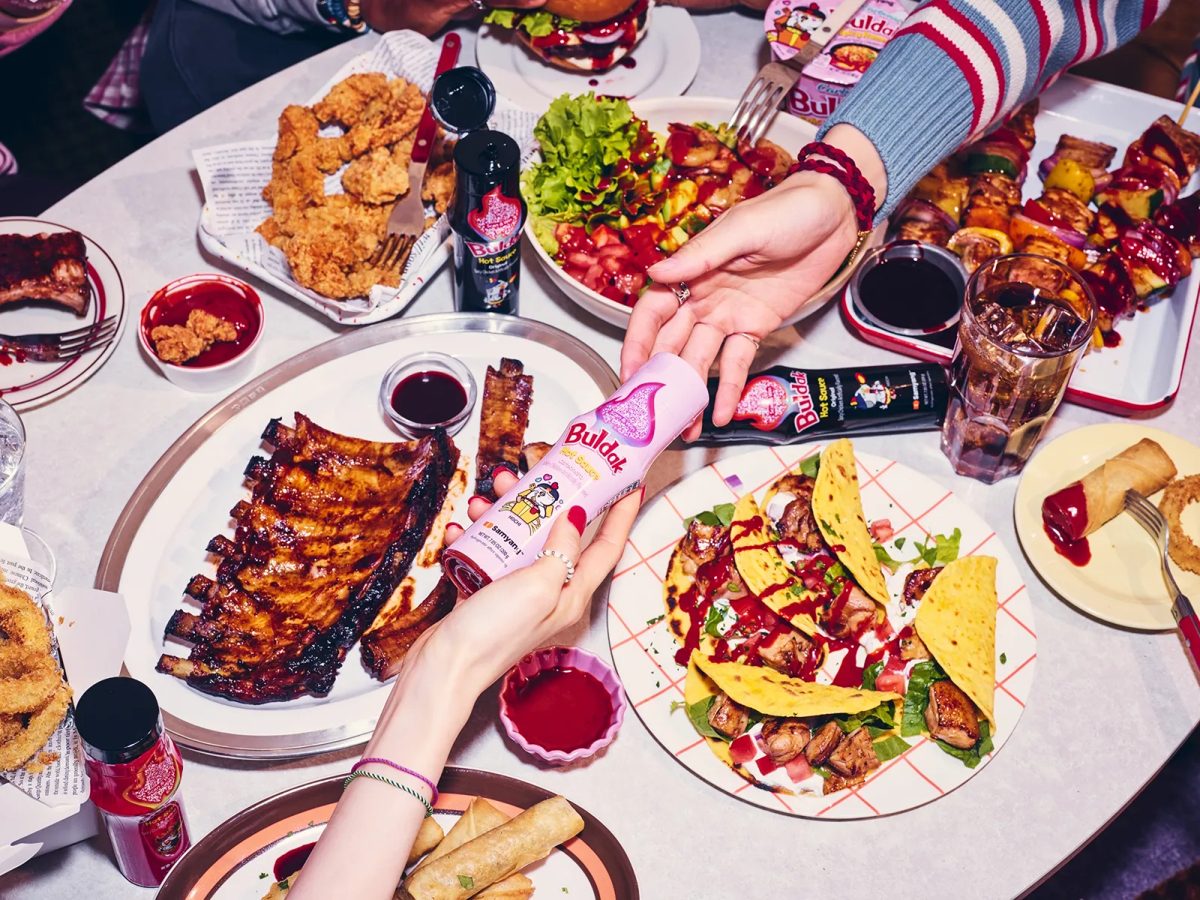
The fastest-growing branch is Buldak Sauce: bottled versions of the signature fire, now exported to about 50 countries, with sauce revenue growing fast enough that Samyang reports it as its own business line. In the US it's being poured on pizza, fried chicken, eggs, even into dessert experiments. Samyang is clearly positioning the sauce as a pantry staple in its own right — the play is no longer "a spicy noodle" but "a spicy flavor platform."
The real story, though, is what home cooks did with it. Korean convenience-store culture turned Buldak into a base ingredient rather than a finished dish: corn cheese Buldak (the version the original developer herself recommended on Korean TV), milk-carbonara hacks that predate the official Carbonara flavor by years, rosé Buldak pasta riding Korea's gochujang-cream wave, and the beloved three-ingredient "bul-gye-chi" combo — buldak, gyeran (egg), chi-jeu (cheese). Half the flavors Samyang sells today started as fan recipes. The noodle became a platform, and the fans became the R&D department.
A quick heat ladder for first-timers, from mildest to bravest: Carbonara (creamy, the friendly gateway) → Cheese → Original (4,404 SHU — roughly twice as hot as Tabasco) → 2x Spicy Hek-Buldak (roughly double the original — the one Denmark tried to ban). My honest advice as someone who cooks Korean food constantly: start with Carbonara, keep milk nearby rather than water — capsaicin is fat-soluble, so dairy actually works — and don't let anyone pressure you up the ladder on day one. The noodles will still be there tomorrow.
Below are the four home versions most worth making — starting with the developer's own.
Try It at Home
Some links below are affiliate links. As an Amazon Associate I earn from qualifying purchases. Learn more
1. Corn Cheese Buldak — the Developer's Own Recipe
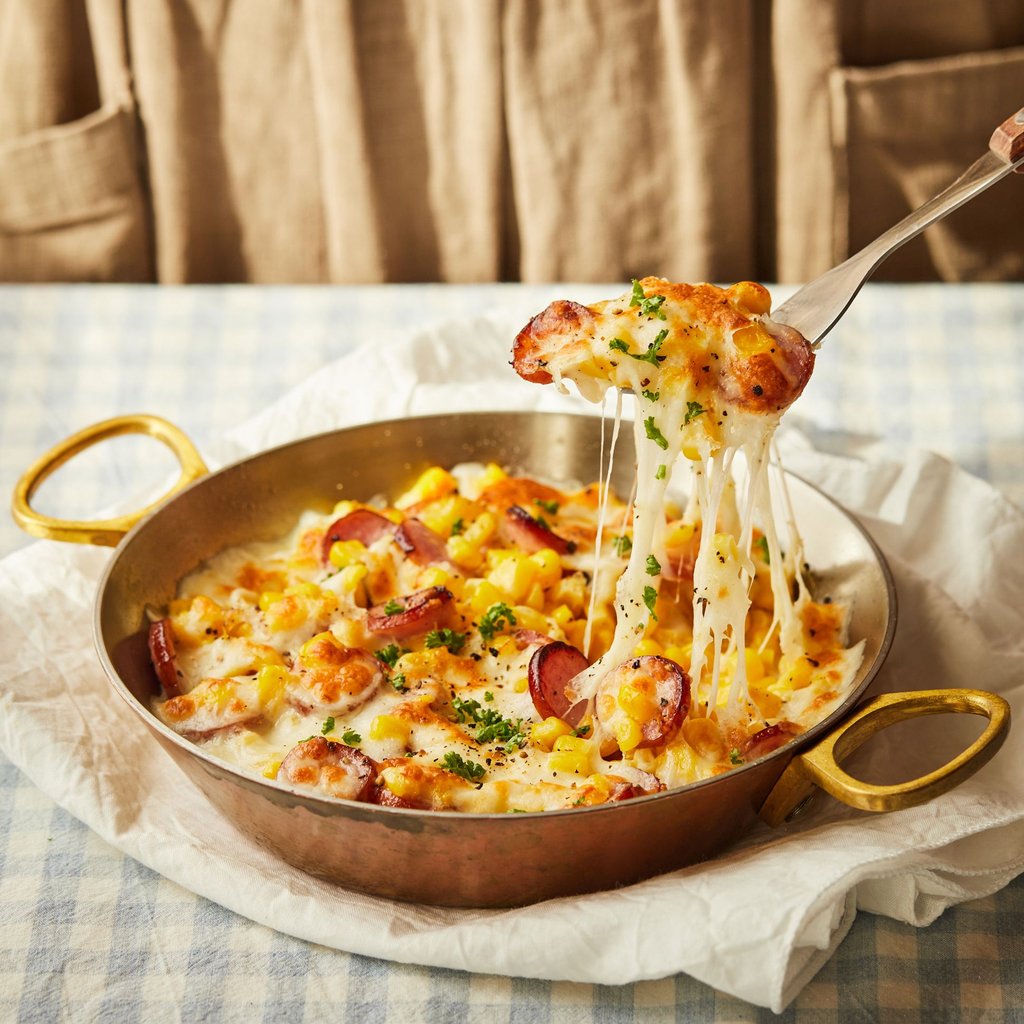
When Buldak's lead developer went on Korean TV, this is the version she recommended — and home cooks all over Korea have been making it since. The logic is simple: sweet corn and mayo blunt the capsaicin burn, sugar rounds the edges, and melted mozzarella stretches over everything. If you've only ever eaten Buldak straight from the packet, this is the single biggest upgrade you can make.
Ingredients
- 1 pack Buldak (original or Carbonara)
- 3-4 tbsp canned sweet corn, drained
- 1 tbsp mayonnaise
- 1/2 tbsp sugar
- A handful of shredded mozzarella
Steps
- Cook the noodles, drain (leave a spoonful of water), and mix in the sauce.
- Mix corn, mayo, and sugar in a small bowl, then spoon it over the noodles.
- Top with mozzarella and microwave about 90 seconds until melted.
- Stir everything together before eating — the sweet-salty corn tames the fire.
- Heat-shy? Use the Carbonara version as the base and this becomes genuinely beginner-friendly.
What I keep in the pantry for this
- Samyang Buldak Original (5-pack)(paid link) — the classic 4,404 SHU version
- Buldak Carbonara (5-pack)(paid link) — the TikTok-famous pink one
2. Milk Carbonara Buldak (the Original Hack)
Before the official pink-packet Carbonara existed, Korean students in convenience stores were already making it with milk from the next fridge over. The homemade version is softer and richer than the packet — closer to an actual cream pasta — and you control exactly how much fire goes in.
Ingredients
- 1 pack Buldak original
- 300ml (1 1/4 cups) milk
- 1 slice cheddar or a handful of mozzarella
- 1 egg yolk (optional, for richness)
Steps
- Boil the noodles in water for 3 minutes, then drain.
- Return noodles to the pan with the milk and simmer over medium heat.
- Add the sauce packet (start with 2/3 if you're heat-shy) and the cheese.
- Stir until the sauce thickens and coats the noodles; kill the heat and stir in the yolk.
- Pro tip: don't let the milk hit a rolling boil after the cheese goes in, or the sauce splits. Low and slow.
If you want to adjust the heat
- Buldak Sauce (bottle)(paid link) — for adjusting heat to taste
3. Rosé Buldak Pasta
Rosé — Korea's gochujang-meets-cream sauce wave — swept café menus a few years back and naturally collided with Buldak. This is the version to cook for friends who swear they can't handle spice: the tomato-cream base absorbs most of the aggression while keeping the signature smoky-sweet heat in the background.
Ingredients
- 1 pack Buldak original
- 150ml milk or light cream
- 2 tbsp tomato-based pasta sauce (or 1 tbsp ketchup)
- 1 clove garlic, minced
- Bacon or sausage, sliced (optional)
- Parmesan to finish
Steps
- Cook noodles 3 minutes and drain. Sauté garlic (and bacon) in a pan.
- Add milk and tomato sauce and bring to a gentle simmer.
- Add noodles and about half the Buldak sauce packet; toss until glossy.
- Finish with parmesan. Add more sauce packet if you want more fire.
- Works equally well with actual pasta: swap the ramen noodles for 100g of cooked spaghetti and use the full sauce packet.
4. Bul-Gye-Chi (Buldak + Egg + Cheese)
The three-ingredient combo every Korean convenience-store regular knows by heart — the name is just the first syllables of buldak, gyeran (egg), and chijeu (cheese). It's the 1 a.m. version: minimum effort, maximum comfort, and the rich yolk-cheese combination does real work against the capsaicin.
Ingredients
- 1 pack Buldak (any flavor)
- 1 fried egg, sunny side up
- 1 slice American cheese or a handful of mozzarella
Steps
- Cook the Buldak according to the package.
- Lay the cheese on the hot noodles so it starts melting.
- Top with the fried egg and break the yolk over everything before eating.